Horse Peak Gelatin Official Website › Blog › Vitamin D With Food
Vitamin D In A Gummy: With A Meal Or Without One?
The label says one gummy daily and nothing about food. Vitamin D3 is fat-soluble and this gummy carries 3,360 IU of it, so the question deserves an honest answer. Here is what the trials found and what they cannot tell you.
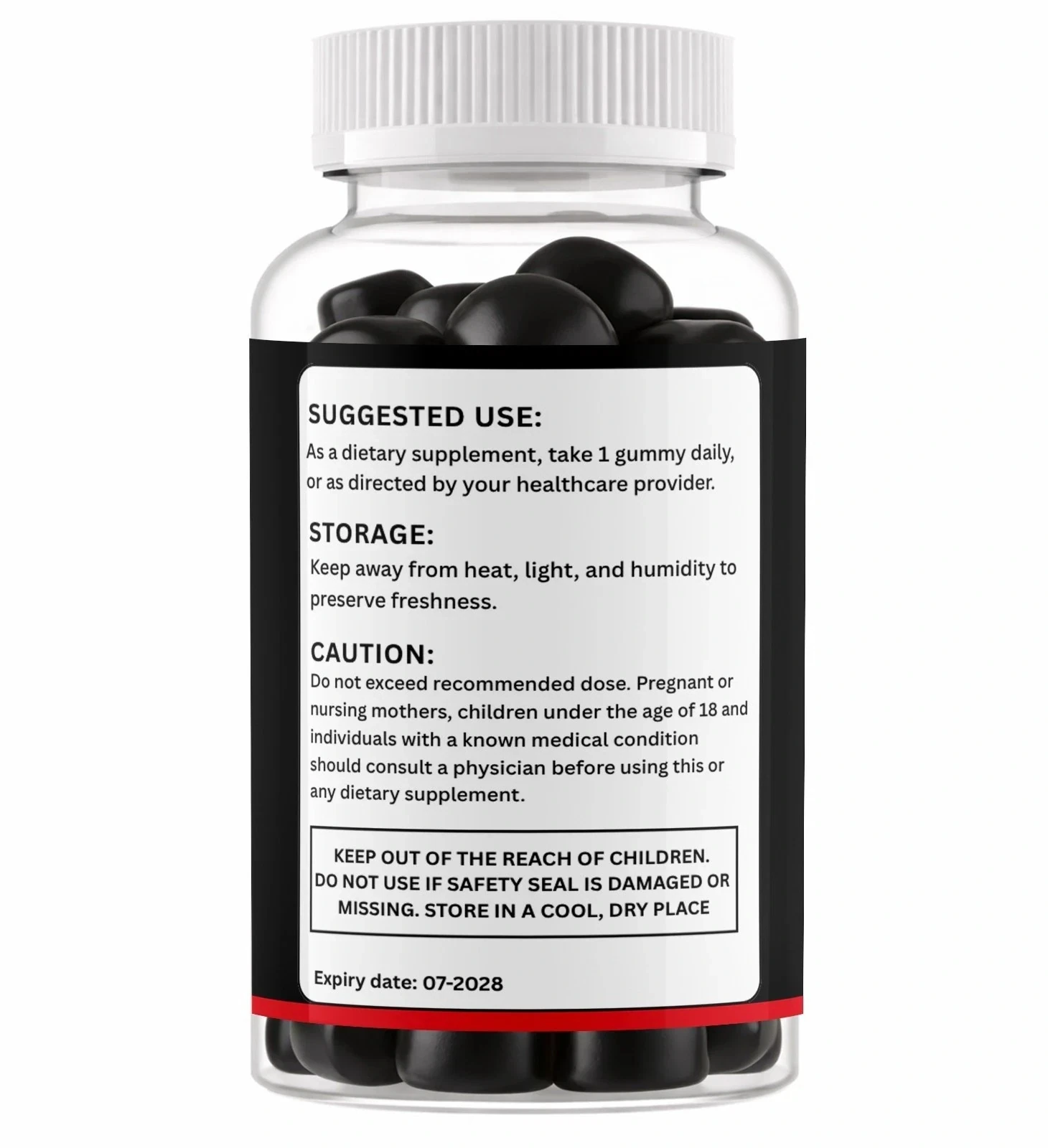
- The label prints no rule about food, time of day or water.
- In two controlled trials a meal with fat improved absorption of a single 50,000 IU dose, with a 32 per cent higher peak in one.
- That dose is about fifteen times this gummy’s 3,360 IU and was given once, so the result does not transfer neatly.
- A crossover study found a vitamin D3 gummy delivered more than a tablet at a 20,000 IU dose.
- The gummy’s 3,360 IU sits inside the 3,200 to 4,000 IU range in which a 2023 meta-analysis found small increases in hypercalcaemia.
What the label says, and what it leaves out
The back of the bottle carries a suggested use line: “As a dietary supplement, take 1 gummy daily, or as directed by your healthcare provider.” That is all of it. There is no time of day, no instruction about food, no loading phase and no advice about water. The storage line asks for a spot away from heat, light and humidity, and the boxed line beneath adds keep out of the reach of children, do not use if the safety seal is damaged, and store in a cool, dry place. The how to use page quotes all of it and says plainly that there is no rule about food.
A label that says nothing about food is not saying food does not matter. It is saying the manufacturer did not think the question was worth a line. For most of the rows on this panel that is a fair call, because the four botanicals sit at 100 micrograms and boron and sodium are minerals. For one row it is a real question, because vitamin D3 is fat-soluble, the amount is real, and there is a body of research on how it behaves when you swallow it with and without a meal. This post is about that research and what it can and cannot tell you.
Why fat comes into it
Vitamin D dissolves in fat, not in water. In the gut it is absorbed along with dietary fat, and a lot of the research asks whether the fat in a meal helps. A 2018 systematic review of intestinal absorption of vitamin D, which included 46 studies, found that vitamin D was better absorbed when it was consumed with fat-containing meals, that absorption also occurred without fat or oily vehicles, and that vitamin D is probably absorbed by passive diffusion together with a mechanism involving membrane carriers, especially cholesterol transporters. The authors described the data as scarce.
That is a gentle result, which is worth noticing. The message is not that the vitamin fails without a meal. It is that a meal with some fat in it seems to help.
One arithmetic point before the trials. This gummy is not a source of dietary fat. The panel prints 20 calories and 4 g of carbohydrate, and four grams of carbohydrate account for about 16 of those 20 calories. That leaves at most four calories for everything else, which is under half a gram of fat at nine calories a gram, and probably nothing. The fat that might help absorb the vitamin has to come from whatever you eat with it.
What the trials measured
Here are the studies most relevant to the question, with their designs as the abstracts give them.
| Study | Design | What they took | What it found |
|---|---|---|---|
| Dawson-Hughes and colleagues, 2015 | 50 healthy older men and women, randomised to one of three breakfasts | One dose of 50,000 IU vitamin D3 after a 12-hour fast, with a fat-free meal or a meal with 30 per cent of calories from fat | Peak plasma vitamin D3 at 12 hours was 32 per cent higher with the fat-containing meals (95% CI 11 to 52 per cent). The ratio of monounsaturated to polyunsaturated fat made no difference |
| Raimundo and colleagues, 2015 | 64 healthy medical residents and students, double-blind, placebo-controlled | One dose of 50,000 IU during a meal with 0 g, 15 g or 30 g of fat, or placebo | After 14 days, vitamin D taken with food raised 25-hydroxyvitamin D more than placebo, and the rise was larger when the meal had at least 15 g of fat |
| Mulligan and Licata, 2010 | 17 patients not responding to treatment in a bone clinic, uncontrolled | Their usual vitamin D, 1,000 to 50,000 IU daily, moved to the largest meal of the day | Mean 25-hydroxyvitamin D rose from 30.5 to 47.2 ng/mL over two to three months, an average rise of 56.7 per cent |
Sources: Dawson-Hughes 2015, Raimundo 2015 and Mulligan and Licata 2010.
Read them as a set. Two carefully designed experiments agree that fat in the meal helps, and one uncontrolled clinic report found a large rise when patients moved their dose to the biggest meal. The clinic report is the weakest of the three, with 17 people, no comparison group and a referral population, and it should be given the weight of a suggestion rather than a result. The two experiments are stronger evidence, but they share a feature that limits how far they travel.
The limit that matters: 50,000 IU is not 3,360 IU
Both controlled trials gave a single dose of 50,000 IU. This gummy carries 3,360 IU, printed on the panel as 84 mcg, so the trial dose is about fifteen times larger and was given once rather than daily. Single large doses and small daily doses are different situations, and a difference in absorption that is easy to see after a huge dose may be harder to see, or matter less, when the amount is modest and repeated every day. Nobody has run the specific experiment, a daily 84 mcg gummy with and without a meal, at least not one that this desk could find.
The honest position is therefore a small one. There is consistent evidence that fat in a meal improves absorption of a vitamin D3 dose. There is no evidence that it changes an outcome for anyone taking a daily amount like this one. Taking the gummy with breakfast, or dinner, costs nothing, and it may help a bit.
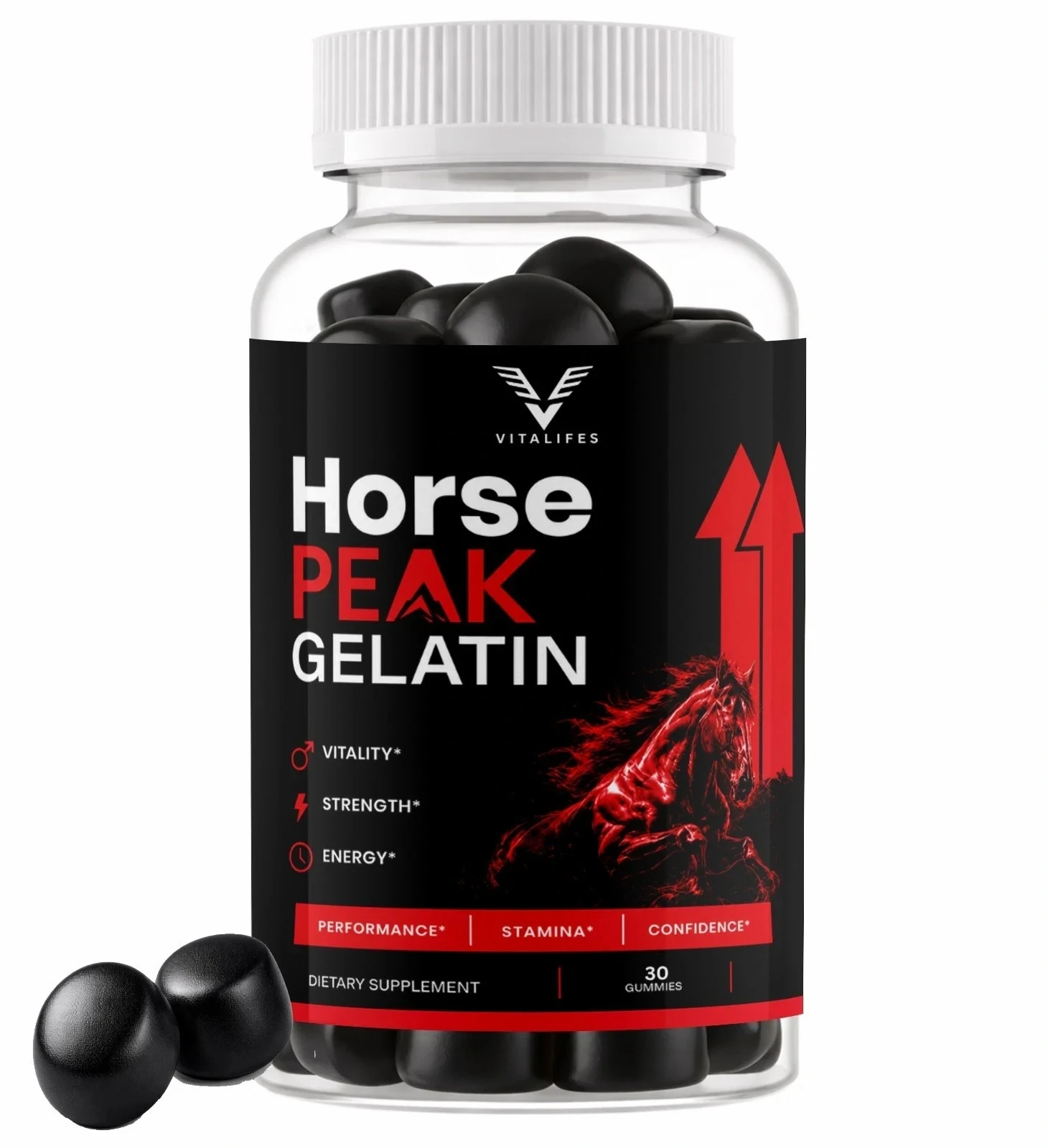
Order Horse Peak Gelatin and attach it to a meal you already eat
One gummy, 84 mcg of vitamin D3 printed on the panel, and a routine that needs no water and no extra step.
Two bottles $158 · six bottles $294 · 60-day money-back guarantee
Order Horse Peak Gelatin On The Official WebsiteOne gummy a day · 30 on the bottle front · lot HOR-26/GO-6588
Does the gummy format change the answer?
A fair follow-up is whether a gummy absorbs differently from a tablet. A 2019 crossover study compared the two directly. Healthy adults aged 18 to 45 took a single 20,000 IU dose of vitamin D3 as a gummy or as a tablet, gave serial blood samples over 48 hours, and then swapped after a two-week washout. A small first study (nine people) and a larger confirmatory one (31 people) both found the gummy delivered more: in the larger study, the area under the concentration curve was 1,474 ng-hours per millilitre for gummies against 774 for tablets, and the average peak was 47.3 ng/mL against 23.4.
That is a favourable result for the format and a useful counterweight to the assumption that a gummy is a worse way to take a vitamin. It comes with the same caveat as everything else on this page. It was a single 20,000 IU dose, not a daily 3,360 IU one, in healthy young adults, and the abstract does not say what they ate. It also measured the plasma level of vitamin D3 itself, not the 25-hydroxyvitamin D that a blood test measures. It tells you the gummy is not disadvantaged. It does not tell you what happens to your own blood level.
What a sensible day looks like
- Pick a meal you never skip. Breakfast for most people. The best time to take a supplement is the time you will remember, and the how to use page covers anchoring the habit in detail.
- Take it with the meal, not before. The trial doses went in with the food. A gummy chewed with the last of your coffee on an empty stomach is not wrong, it is just the less-supported version.
- Do not engineer the meal. The one trial that varied the amount used 0, 15 and 30 g of fat, and the larger rise showed at 15 g and above. Nobody needs to weigh anything. A fat-free breakfast is the one to avoid.
- If you forget, take it when you remember, once. The label says not to exceed the recommended dose. Do not take two the next day to catch up.
- Stay away from heat. A jar on a sunny sill or in a hot car is a bigger threat to a gummy than any question of timing. The storage line on the label is there for a reason.
As for time of day, morning or evening, this desk searched and found no controlled trial that identifies a best hour for vitamin D. The only timing variable with evidence behind it is the meal.
The number that matters more than the meal
Timing is a small lever. The amount is a large one, and it is worth adding up. One gummy is 84 mcg, or 3,360 IU, printed as 420 per cent of the Daily Value. The upper intake level for adults set by the Institute of Medicine is 4,000 IU, which is 100 mcg, and its report on tolerable upper intake levels is the source for that figure. The gummy therefore supplies 84 per cent of it before anything else in the cupboard is counted.
The ceiling is not a cliff, and it is not a bright line either. A 2023 systematic review and meta-analysis pooled 22 randomised trials of 3,200 to 4,000 IU a day lasting at least six months, in 12,952 participants, and found a relative risk of hypercalcaemia of 2.21 (95% CI 1.26 to 3.87), a vitamin D-induced frequency of about four cases per thousand, and increased relative risks of falls (1.25) and hospitalisation (1.16). It found no significant difference in kidney stones, hypercalciuria or mortality. The authors concluded that doses in that range are not completely safe for a small proportion of people, and that trial reporting of safety outcomes needs to improve.
The range that review examined runs from 3,200 to 4,000 IU. This gummy sits inside it at 3,360. That is not an alarm, because those trials were of people taking the dose for six months or more and the increases were small in absolute terms. It is a reason to treat the sum as a sum, and it is why the label’s own suggestion of talking to a healthcare provider is not decoration.
Medication is the other half of the sum. A post hoc analysis of a dose-finding trial looked at 328 Black adults given placebo or 1,000, 2,000 or 4,000 IU of D3 a day for three months, and compared the 84 who were also taking hydrochlorothiazide, a common blood pressure diuretic that reduces calcium loss in urine, with 44 who were not. Users of the diuretic had calcium levels 0.2 mg/dL higher, one of them was hypercalcaemic and none of the non-users were. The authors concluded that up to 4,000 IU with the diuretic showed a low frequency of hypercalcaemia. That is a reassuring result from a study not designed to test the question, and it also shows why calcium and vitamin D on top of a diuretic is a combination to mention to the prescriber.
What this evidence cannot tell you
- Whether you need vitamin D at all. A blood test for 25-hydroxyvitamin D answers that better than any bottle, and the who it is for page says the same.
- Whether the meal effect matters at a daily 84 mcg. It has been shown at a single 50,000 IU. Nobody has shown it at this dose.
- How your own body absorbs. The trials report averages. Body weight, gut health, and other medicines all change the individual result.
- Whether the label amount is what is in the gummy. That is a question about the batch, not the meal, and the post on lot numbers explains what a code can and cannot establish.
What a buyer can do with this
- Take the gummy with a meal that has some fat in it. It is the only timing choice with any evidence, and it is free.
- Add up every source of vitamin D first. Multivitamins, calcium formulas, cod liver oil and standalone capsules all carry it, and the post on the nutrition block covers the other trade-offs the gummy format asks you to accept.
- Tell your prescriber. If you take a thiazide diuretic, a calcium supplement, or any medicine for a long-term condition, the printed caution applies and the conversation takes two minutes.
- Do not chase perfect timing. Consistency over sixty days matters more than the hour, and the post on judging a daily gummy shows how to keep an honest record.
The short verdict
The question of taking a vitamin D gummy with or without food has a small, consistent and honest answer. Fat in a meal helps absorption in controlled trials of large single doses, the gummy is not a worse vehicle than a tablet, and nothing on the label forbids or requires either. Take it with breakfast because that is when you will remember and because it may help a little. Then spend your attention on the number that matters more, which is the total amount of vitamin D you take from everything, and on the one instruction the label does print with a number attached: do not exceed the recommended dose.
References
- Silva MC, Furlanetto TW. Intestinal absorption of vitamin D: a systematic review. Nutr Rev. 2018;76(1):60-76. PMID 29025082. https://pubmed.ncbi.nlm.nih.gov/29025082/
- Dawson-Hughes B, Harris SS, Lichtenstein AH, et al. Dietary fat increases vitamin D-3 absorption. J Acad Nutr Diet. 2015;115(2):225-230. PMID 25441954. https://pubmed.ncbi.nlm.nih.gov/25441954/
- Raimundo FV, Lang MA, Scopel L, et al. Effect of fat on serum 25-hydroxyvitamin D levels after a single oral dose of vitamin D in young healthy adults: a double-blind randomized placebo-controlled study. Eur J Nutr. 2015;54(3):391-6. PMID 24853643. https://pubmed.ncbi.nlm.nih.gov/24853643/
- Mulligan GB, Licata A. Taking vitamin D with the largest meal improves absorption and results in higher serum levels of 25-hydroxyvitamin D. J Bone Miner Res. 2010;25(4):928-30. PMID 20200983. https://pubmed.ncbi.nlm.nih.gov/20200983/
- Wagner CL, Shary JR, Nietert PJ, et al. Bioequivalence Studies of Vitamin D Gummies and Tablets in Healthy Adults: Results of a Cross-Over Study. Nutrients. 2019;11(5). PMID 31067745. https://pubmed.ncbi.nlm.nih.gov/31067745/
- Zittermann A, Trummer C, Theiler-Schwetz V, Pilz S. Long-term supplementation with 3200 to 4000 IU of vitamin D daily and adverse events: a systematic review and meta-analysis of randomized controlled trials. Eur J Nutr. 2023;62(4):1833-1844. PMID 36853379. https://pubmed.ncbi.nlm.nih.gov/36853379/
- Chandler PD, Scott JB, Drake BF, et al. Risk of hypercalcemia in blacks taking hydrochlorothiazide and vitamin D. Am J Med. 2014;127(8):772-8. PMID 24657333. https://pubmed.ncbi.nlm.nih.gov/24657333/
- Institute of Medicine (US) Committee to Review Dietary Reference Intakes for Vitamin D and Calcium; Ross AC, Taylor CL, Yaktine AL, Del Valle HB, editors. Tolerable Upper Intake Levels: Calcium and Vitamin D. In: Dietary Reference Intakes for Calcium and Vitamin D. Washington (DC): National Academies Press (US); 2011. https://www.ncbi.nlm.nih.gov/books/NBK56058/
More about Horse Peak Gelatin
Order Horse Peak Gelatin and take it with breakfast
One gummy, 84 mcg of vitamin D3 printed on the panel, and a routine that needs no water and no extra step.
Two bottles $158 · six bottles $294 · 60-day money-back guarantee
Order Horse Peak Gelatin On The Official WebsiteOne gummy a day · 30 on the bottle front · lot HOR-26/GO-6588