Horse Peak Gelatin Official Website › Blog › Do Gummy Vitamins Expire
Do Gummy Vitamins Actually Expire?
This bottle's artwork carries an expiry of 07-2028. A gummy is not a capsule, and the question buyers actually search — do gummy vitamins really expire, or is the date closer to a suggestion — does not have one honest answer for every ingredient on the panel. It has a different answer for the vitamin than for the botanicals, and this post works through why.
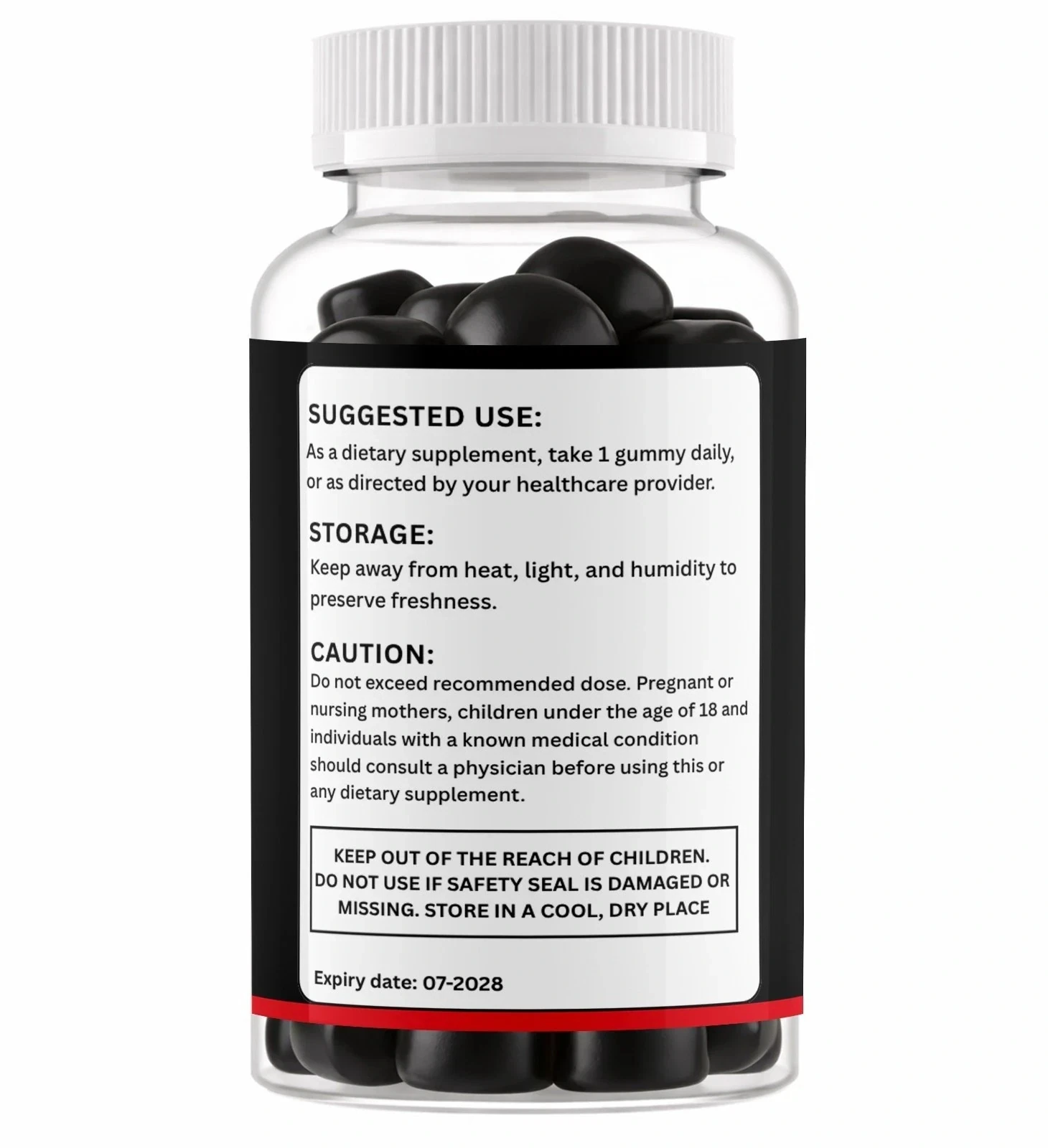
- This artwork prints an expiry of 07-2028, and the base of the bottle carries its own stamped date to check it against.
- A gummy is chemically closer to a piece of candy than to a capsule: it can lose moisture, harden, soften or clump well before any active ingredient inside it is actually gone.
- Vitamin D3, the largest real dose on this panel, is described in the pharmaceutical literature as poorly soluble and prone to gradual potency loss during storage — a property of the molecule, not a flaw specific to this product.
- Heat and humidity are the two conditions that most reliably shorten a gummy's real shelf life, faster than time alone does at room temperature.
- An expiry date is the manufacturer's own estimate, not an independent, published test of this exact bottle at that exact date.
The date on this bottle
This product's artwork carries an expiry of 07-2028, and the physical bottle carries its own stamp on the base, which the lot-number post on this blog already covers as one of the checks worth running against a shipment. Both dates are printed statements from the manufacturer. Neither is an independent test result, and that distinction is the subject of this post rather than a criticism of either number.
Why a gummy is a different shelf-life problem than a capsule
A hard-shelled capsule or a pressed tablet is, chemically, a fairly stable container: dry, low in moisture, and mostly inert until it is swallowed. A gummy is closer to a piece of candy that happens to carry active ingredients, and that changes what "going bad" looks like well before any nutrient inside it has actually broken down.
A 2026 review of gummy reformulation covering twenty studies on gummy technology notes directly that the choice of gelling agent "exhibited favorable effects on the texture, gel-forming capacity, stability, and shelf life of the samples" — in other words, shelf life in a gummy is partly a function of the matrix holding it together, not only of the actives suspended inside it. A gummy that has gone hard, sticky, or visibly clumped together is showing a matrix problem first, which can happen on a timeline that has nothing to do with when the vitamin D3 inside it actually loses potency.
What actually degrades, row by row
Not every active on this panel ages the same way, and being specific matters more than a blanket answer either direction.
| Row | What the literature says about storage stability |
|---|---|
| Vitamin D3 (cholecalciferol) | Described in formulation research as poorly soluble and chemically fragile, "prone to loss of potency during storage" — the specific property a 2026 pharmaceutical stability study set out to engineer around |
| Boron (boron glycinate) | A mineral chelate; minerals as a class are chemically stable and not the part of a gummy expected to degrade meaningfully with age |
| The four botanical extracts | Already present at only 100 micrograms each on this panel; any further loss from age changes a very small number into a slightly smaller one |
| The gummy matrix itself | Sugars and gelling agents can visibly change texture — hardening, softening, clumping — on a timeline driven by moisture and temperature rather than by the expiry date alone |
Vitamin D3 is the row this post spends the most time on because it is also the largest real dose on the panel; the botanical rows were already small enough that further degradation is a minor concern by comparison.
A 2026 pharmaceutical formulation study built specifically to address this problem states it directly: "the development of aqueous vitamin D3 supplements remains challenging because the molecule is poorly soluble, chemically fragile, and prone to loss of potency during storage." That is not a finding about this product. It is a finding about the molecule itself, in any format, which is exactly why formulators spend research effort protecting it rather than treating vitamin D3 as shelf-stable by default.
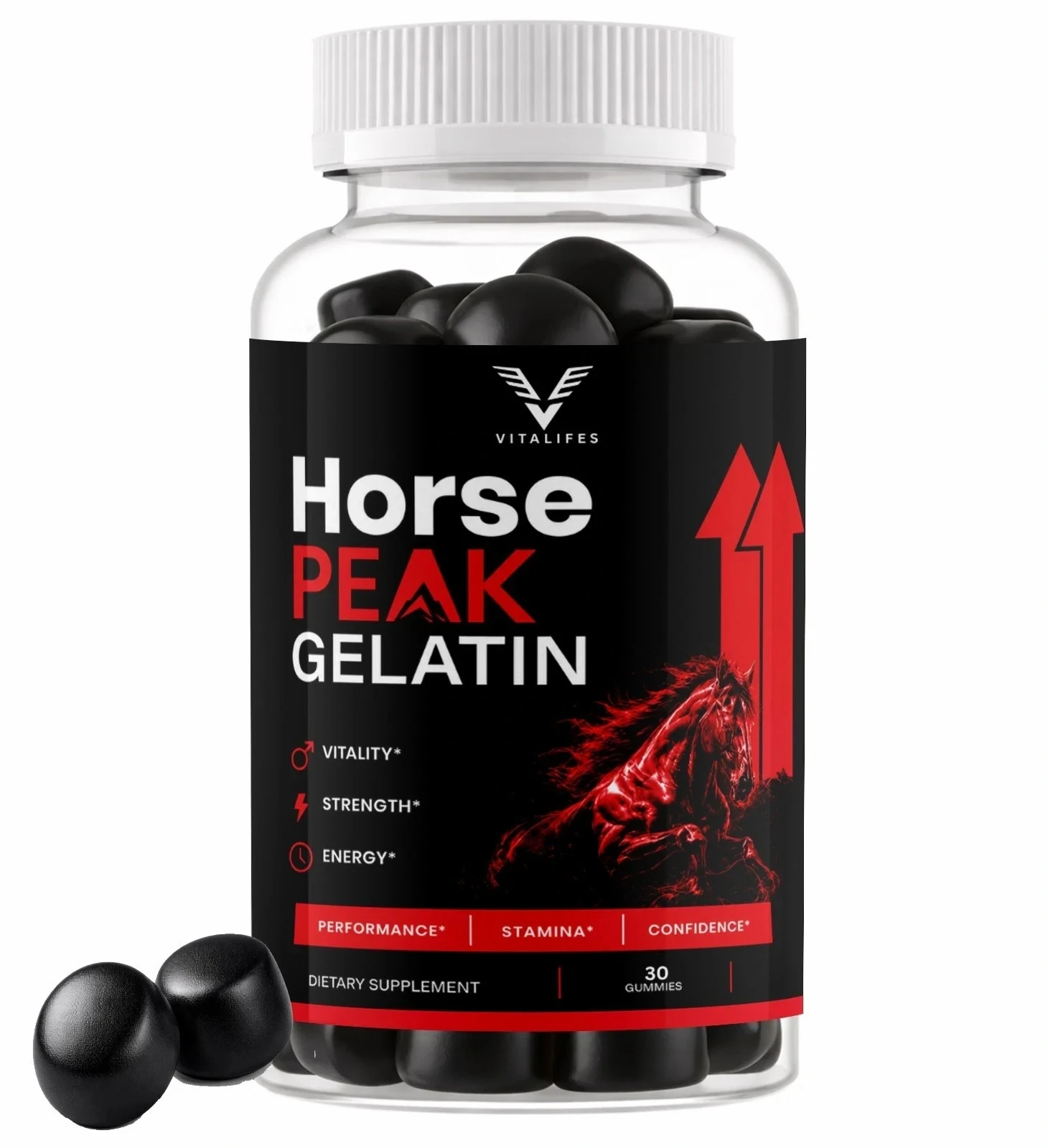
Order Horse Peak Gelatin from a run with a real expiry on it
07-2028 on the artwork, lot HOR-26/GO-6588 on the base, and a 60-day window that starts on the day you buy it rather than the day the bottle was made.
Two bottles $158 · six bottles $294 · 60-day money-back guarantee
Order Horse Peak Gelatin On The Official WebsiteOne gummy a day · 30 on the bottle front · lot HOR-26/GO-6588
Why heat matters more than the calendar
The searches buyers actually run on this topic — do gummy vitamins go bad in heat, can a hot car ruin them — are pointed at the right variable. A sealed bottle sitting in a climate-controlled cabinet and an identical bottle left in a hot vehicle for a summer are not aging at the same rate, even though the printed expiry date is identical on both. Heat accelerates two separate processes at once: it speeds up chemical degradation of moisture- and temperature-sensitive actives like vitamin D3, and it softens the gelling matrix, which is why a gummy left somewhere hot often turns into a fused, sticky mass well before the date on the label arrives.
Humidity does a related job from a different angle. Gummies are formulated at a specific moisture content, and a container that is left open, or stored somewhere damp, lets that balance shift, which shows up first as texture change and eventually affects the stability of the coating and the actives it is protecting.
What an expiry date is, and what it is not
- What it is. A manufacturer's own estimate of how long the product is expected to hold acceptable potency and quality when stored as directed, arrived at through the manufacturer's own stability testing.
- What it is not. An independent laboratory's published test of this exact lot, at that exact date, confirming the labeled amount is still present. No such assay has been published for this product, a point this blog's lot-number post already makes about the panel more broadly.
- Why that distinction is not unique to this brand. A 2023 JAMA study of melatonin gummies found the labeled amount did not reliably match what was actually in the product tested, on ingredients from a range of manufacturers — a finding about label-to-content accuracy generally, not a claim about this specific bottle, and a reminder that a printed number and a verified number are not automatically the same thing at any date.
What "expired" actually means for a gummy like this one
Past the printed date, the realistic picture for a product like this is gradual decline rather than a cliff edge. Vitamin D3 potency likely drifts downward rather than disappearing outright; the botanical rows, already at 100 micrograms, have little further to lose in absolute terms; and the more immediately noticeable change is usually textural — hardening, stickiness, or an off smell — which is the gummy telling a buyer something before any lab test would need to. A product that looks, smells and chews normally past its date is not thereby proven equivalent to a fresh one; it is simply not showing the obvious failure mode first.
None of this is a safety claim in either direction. A 2026 American College of Physicians position paper on modernizing supplement regulation is a reminder of the wider context: because supplements are regulated as food rather than reviewed and approved as drugs, there is no equivalent to the FDA's drug expiration-dating framework standing behind the date on this artwork. The date is real and it is the manufacturer's own estimate. It is not backed by the same regulatory apparatus a prescription bottle's date is.
It is also worth separating two questions that get asked as one: is it still safe, and is it still full strength. For an ordinary vitamin gummy stored reasonably, the safety question resolves faster than the potency question does — there is little in this formula's ingredient list prone to becoming actively harmful with age the way a perishable food can. The potency question is the slower-moving one this post has been about, and it is the one a printed date can only estimate rather than prove for the specific bottle in a specific kitchen.
Storing it so the date on the artwork holds
- Keep the cap tight and the bottle closed between servings. Repeated open-air exposure is one of the more controllable moisture risks.
- Store it somewhere that does not get hot. A kitchen cabinet away from a stove or a sunlit windowsill beats a car console or a bathroom shelf that runs warm and humid from showers.
- Check the base stamp against the artwork date on arrival. The lot-number post covers this exact check in more detail.
- Treat a texture change as real information. A gummy that has hardened or fused together is telling you something about its storage history, whether or not the calendar date has passed yet.
References
- Caccavo D, Broegg L, Lamberti G, De Piano R, Barba AA. Process-guided design of nanoliposomal vitamin D3: formulation, stability and quality by design mapping. Int J Pharm. 2026;696:126825. PMID 41916513. https://pubmed.ncbi.nlm.nih.gov/41916513/
- Gonzales-Quispe I, Salvador-Reyes R, Schmiele M, Paucar-Menacho LM. Unconventional Ingredients in Gummy Reformulation: A Review of Nutritional, Functional, and Technological Implications. Foods. 2026;15(15):2615. PMID 42587875. https://pubmed.ncbi.nlm.nih.gov/42587875/
- Cohen PA, Avula B, Wang YH, Katragunta K, Khan I. Quantity of Melatonin and CBD in Melatonin Gummies Sold in the US. JAMA. 2023;329(16):1401-1402. PMID 37097362. https://pubmed.ncbi.nlm.nih.gov/37097362/
- Cline K, Beachy MW, Carr PW; Health and Public Policy Committee of the American College of Physicians. Modernizing the Regulatory Framework for Dietary Supplements: A Position Paper From the American College of Physicians. Ann Intern Med. 2026;179(9):1290-1292. PMID 42441966. https://pubmed.ncbi.nlm.nih.gov/42441966/
More about Horse Peak Gelatin
Order Horse Peak Gelatin and store it so the date holds
07-2028 on the artwork, a tight cap and a cool cabinet between servings, and 60 days from the date of purchase to change your mind regardless.
Two bottles $158 · six bottles $294 · 60-day money-back guarantee
Order Horse Peak Gelatin On The Official WebsiteOne gummy a day · 30 on the bottle front · lot HOR-26/GO-6588