Horse Peak Gelatin Official Website › Blog › When A Panel Contradicts Itself
Check a HorsePeak Gelatin Panel for Printing Errors
You can check a HorsePeak Gelatin panel in two minutes with only the bottle in hand. The post gives six checks, shows what they find on this label, and explains why a print error is not the same as a dose error.
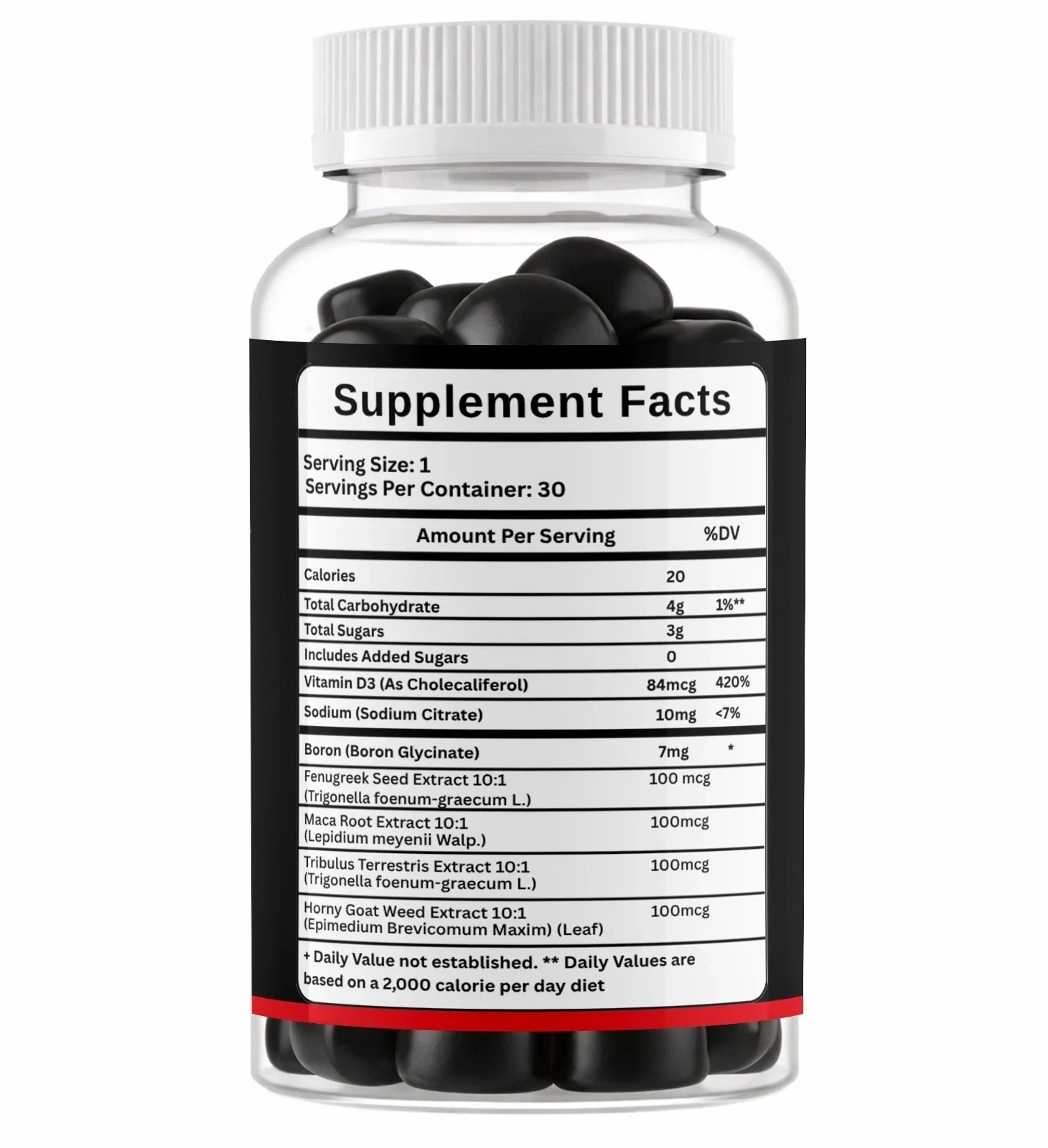
- A percentage on a panel is arithmetic, and arithmetic can be checked.
- Six checks take about two minutes and need nothing but the bottle.
- On this panel two percentages come out right and one comes out wrong by a factor of about seventeen.
- One row prints the wrong plant's Latin name, and two words are misspelt.
- None of the four errors touches an amount, which is the distinction that matters.
Why a panel can be checked at all
A Supplement Facts panel is not a free-form advertisement. It is a structured table with conventions: a serving size at the top, an amount per serving in the middle column, a percentage of a Daily Value where one exists, and a footnote defining every symbol used above it.
Those conventions create redundancy, and redundancy is what makes checking possible. If the amount and the percentage both appear, one can be derived from the other. If a symbol appears in the table, it should appear in the footnote. If the front of the bottle states a count, the panel should agree with it.
None of that proves what is inside. It proves whether the document was built with care, which is a genuinely useful signal in a category where a lot of labels are assembled from templates.
What a panel cannot be checked against
There is no way to check an amount from the outside. A printed 7 mg is a claim, and only a laboratory can test it. The checks in this post are all internal: the panel against itself, and the panel against the rest of the bottle.
Six checks, and how to run each one
These are in the order worth running them, quickest first.
| The check | How to run it | Takes |
|---|---|---|
| A percentage against its Daily Value | Divide the amount by the Daily Value for that nutrient and compare with what is printed | Fifteen seconds |
| Micrograms to international units | Multiply micrograms of vitamin D by 40 | Ten seconds |
| The container count | Read the front of the bottle, then the top of the panel | Five seconds |
| The footnote symbols | Match every symbol used in the table to one the footnote defines | Twenty seconds |
| The Latin names | Check that each binomial belongs to the plant on its own row | A search, if you do not know them |
| The serving arithmetic | Multiply the serving amount by the servings per container | Fifteen seconds |
Six checks, about two minutes in total, and every one of them runs on the bottle in your hand without any equipment.
The two that catch the most
The percentage check and the footnote check catch more than the other four together. A percentage is the one figure on a panel that is derived rather than declared, so it is where a template gets left un-updated. A footnote symbol is the easiest thing in typesetting to substitute by accident.
The Latin-name check is slower because most people do not know the binomials, and it is the one that finds the most embarrassing errors when it does find one.
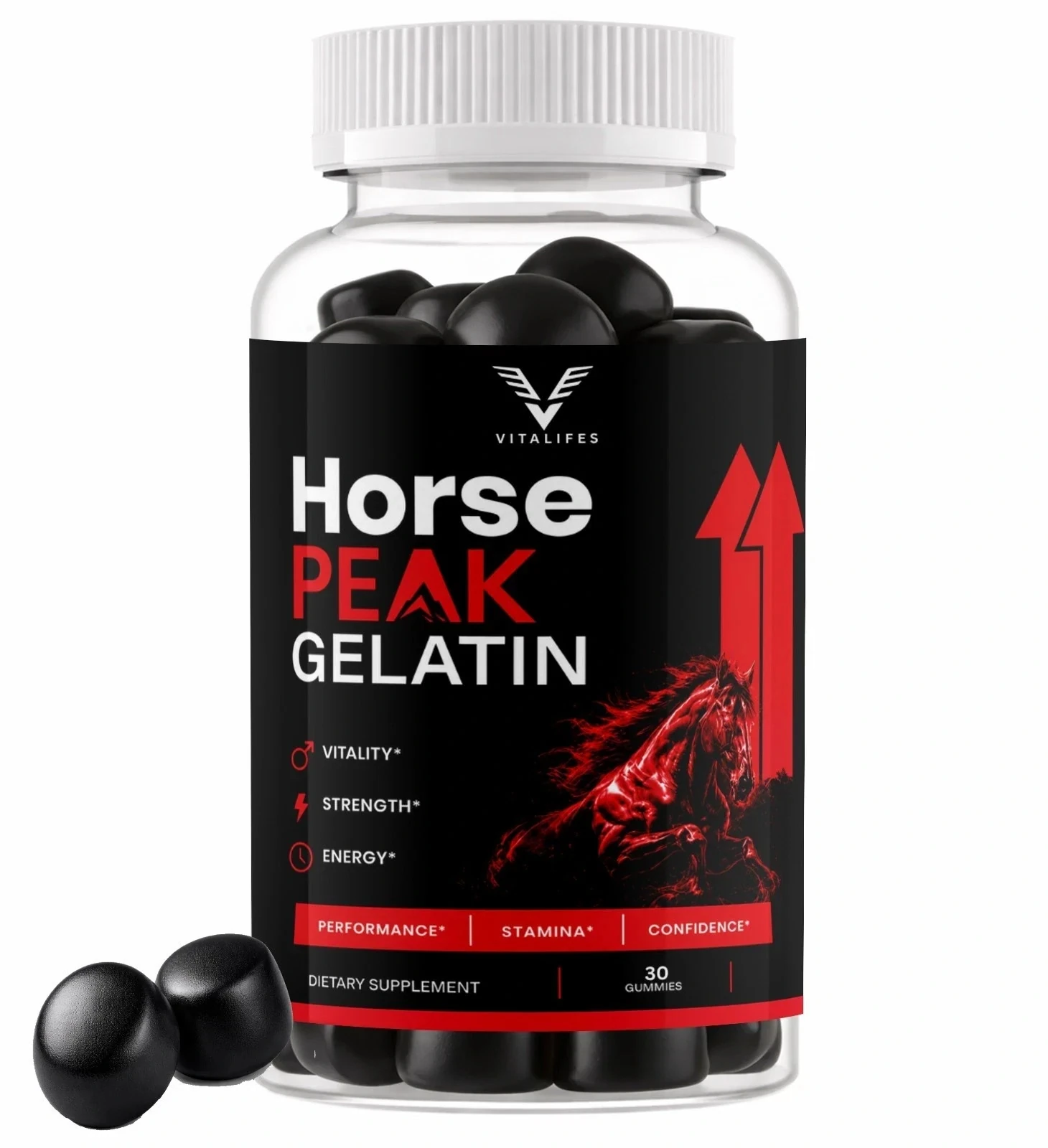
Order Horse Peak Gelatin and run these checks yourself
Every figure quoted in this post is printed on the back of the bottle that arrives. Nothing here was taken from a marketing page.
Two bottles $158 · six bottles $294 · 60-day money-back guarantee
Order Horse Peak Gelatin On The Official WebsiteOne gummy a day · 30 on the bottle front · lot HOR-26/GO-6588
What those checks find here
Run all six on this product and the result splits cleanly.
| Check | On this panel | Verdict |
|---|---|---|
| Vitamin D3 percentage | 84 mcg against a 20 mcg Daily Value, printed as 420% | Correct |
| Vitamin D3 in IU | 84 mcg is 3,360 IU | Correct, and 84% of the adult ceiling |
| Carbohydrate percentage | 4 g against 275 g, printed as 1% | Correct |
| Sodium percentage | 10 mg against 2,300 mg, printed as under 7% | Wrong. It is 0.4% |
| Footnote symbols | The boron row is marked with a symbol the footnote does not define | Inconsistent |
| Latin names | The Tribulus row prints fenugreek's binomial | Wrong, and the clearest error on the panel |
| Two spellings | Cholecaliferol and Brevicomum | Both misspelt |
Four errors on one panel, and not one of them touches an amount. Every milligram and microgram here is internally consistent with every other figure on it.
The sodium row is the one that fails its own arithmetic. Ten milligrams against a 2,300 mg Daily Value is 0.4%, and the panel prints under seven percent. It is off by about seventeen times, and it takes fifteen seconds to find.
The Tribulus row is the one that would embarrass a proofreader. It prints Trigonella foenum-graecum L., which is fenugreek's binomial and appears correctly two rows above. Tribulus terrestris L. belongs there.
The footnote defines a dagger as Daily Value not established, which is correct for boron and correct for the four botanicals. The boron row itself is marked with a different symbol. Nothing about the meaning changes; the table simply does not match its own legend.
Two kinds of error, and why only one is serious
This is the part of the exercise that decides what to do with the findings.
A typesetting error
A wrong percentage beside a right milligram. A symbol that does not match its footnote. A misspelt ingredient name. These lower confidence in the proofreading and they do not change what is in the gummy.
All four errors on this panel are of this kind. Every amount is internally consistent: the vitamin D3 figure converts correctly, the carbohydrate percentage is right, and the serving arithmetic holds.
A measurement error
A wrong milligram. An amount that contradicts the serving size. A container count that does not match the front of the bottle. These are a different category of problem entirely, because they mean the document is wrong about the product rather than about itself.
None of those appears here. That distinction is why this post reports four errors and does not conclude that the label is unreliable.
A carefully made formula with a carelessly proofread panel is a different thing from a carelessly made formula. On the evidence available, this is the first.
Why panels drift in the first place
Nobody sets out to print a wrong percentage. Panels drift for three ordinary reasons and recognising them is part of reading one fairly.
The first is templating. A designer starts from a previous product's artwork, replaces the rows and leaves a percentage or a Latin name behind. That is almost certainly what happened on the Tribulus row here, because the binomial it prints appears correctly two rows above it.
The second is that the percentage is derived rather than declared. A formulator supplies amounts; somebody else works out the Daily Value column, and that somebody is not always the person who knows which Daily Value applies.
The third is typography. Daggers, double daggers and asterisks are visually similar at six point, and a footnote defined in one and used in another is the commonest slip on any panel in this category.
What no amount of checking reaches
Three things on this panel resist every check in this post, and it is worth knowing which they are before treating a clean audit as a clean bill of health.
- The extract ratios. Four rows print 10:1. No analytical method confirms a plant-to-extract ratio, so it cannot be right or wrong in the way a percentage can.
- Botanical identity and consistency. Even with the correct Latin name printed, material from one plant can vary substantially between sources, which is a manufacturing question rather than a labelling one.
- Whether the contents match the amounts. That needs a laboratory. Assay work on gummies exists for other ingredients and none has been published for this one.
The two ceilings on this panel are worth knowing for a different reason. Vitamin D has an adult upper intake level of 4,000 IU a day and boron has one of 20 mg. Those are not checks on the label; they are checks on your own cupboard, and they are the arithmetic this website asks every reader to do before a first gummy.
Making it a habit
The reason to do this on every supplement rather than on one is that it costs two minutes and it compounds. After half a dozen labels you develop a feel for which ones were assembled and which were written.
- Read the serving size first. Everything below it is meaningless without it.
- Pick one row with a Daily Value and check the percentage. Any row will do.
- Match every symbol in the table to the footnote.
- Compare the front of the bottle with the top of the panel.
- Look for what is absent: an Other Ingredients line, an allergen statement.
- Write down anything that does not add up, and ask about it before buying rather than after.
On this product the exercise finds four printing errors and no arithmetic failure on an amount. The supplement facts page reproduces the panel in full, and the verification page carries the same checks as a procedure you can follow with the bottle in front of you.
References
- Institute of Medicine (US) Committee to Review Dietary Reference Intakes for Vitamin D and Calcium; Ross AC, Taylor CL, Yaktine AL, Del Valle HB, editors. Tolerable Upper Intake Levels: Calcium and Vitamin D. In: Dietary Reference Intakes for Calcium and Vitamin D. Washington (DC): National Academies Press (US); 2011. https://www.ncbi.nlm.nih.gov/books/NBK56058/
- Institute of Medicine (US) Panel on Micronutrients. Arsenic, Boron, Nickel, Silicon, and Vanadium. In: Dietary Reference Intakes for Vitamin A, Vitamin K, Arsenic, Boron, Chromium, Copper, Iodine, Iron, Manganese, Molybdenum, Nickel, Silicon, Vanadium, and Zinc. Washington (DC): National Academies Press (US); 2001. https://www.ncbi.nlm.nih.gov/books/NBK222322/
- Monagas M, Brendler T, Brinckmann J, et al. Understanding plant to extract ratios in botanical extracts. Front Pharmacol. 2022;13:981978. PMID 36249773. https://pubmed.ncbi.nlm.nih.gov/36249773/
- Yong EL, Wong SP, Shen P, et al. Standardization and evaluation of botanical mixtures: lessons from a traditional Chinese herb, Epimedium, with oestrogenic properties. Novartis Found Symp. 2007;282:173-88. PMID 17913231. https://pubmed.ncbi.nlm.nih.gov/17913231/
- Cohen PA, Avula B, Wang YH, Katragunta K, Khan I. Quantity of Melatonin and CBD in Melatonin Gummies Sold in the US. JAMA. 2023;329(16):1401-1402. PMID 37097362. https://pubmed.ncbi.nlm.nih.gov/37097362/
More about Horse Peak Gelatin
Order Horse Peak Gelatin with the panel already checked
Six actives, an amount against each, and a panel whose two checkable percentages come out right.
Two bottles $158 · six bottles $294 · 60-day money-back guarantee
Order Horse Peak Gelatin On The Official WebsiteOne gummy a day · 30 on the bottle front · lot HOR-26/GO-6588