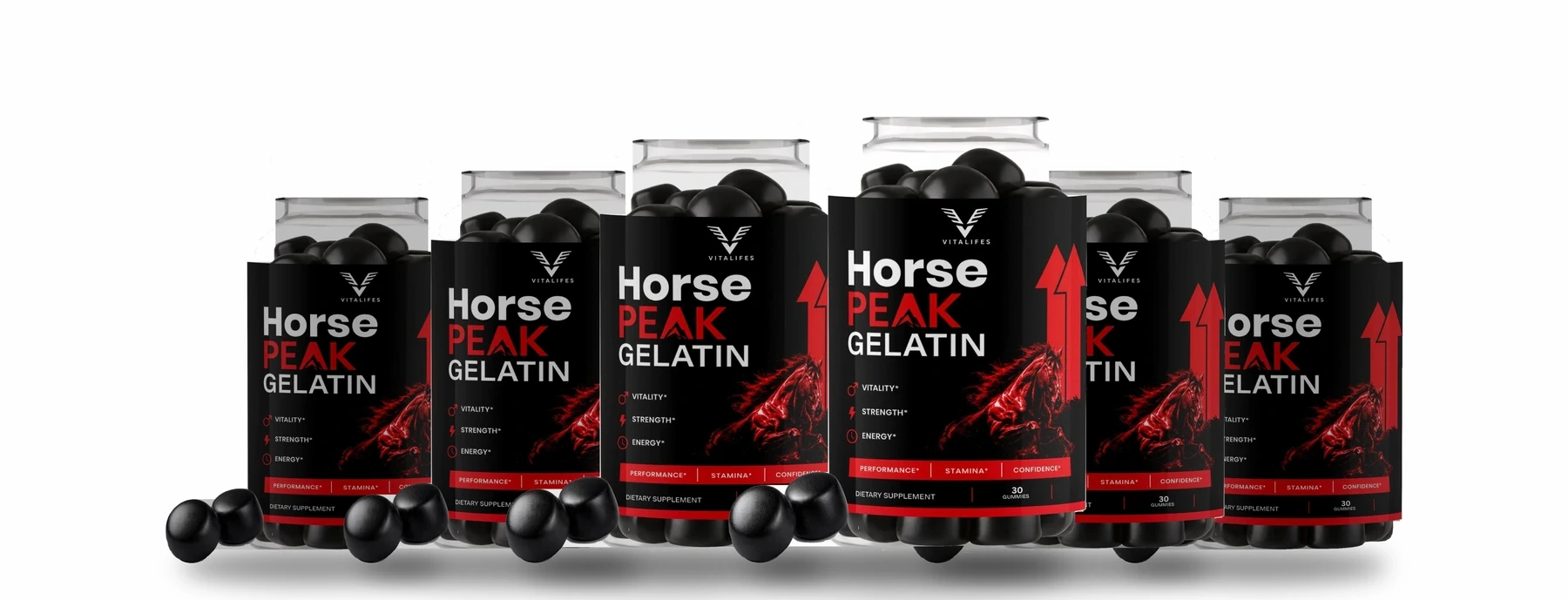
Horse Peak Gelatin Official Website › Blog › What is in it?
Horse Peak Gelatin Ingredients: What Is in Each Gummy and the Supplement Facts
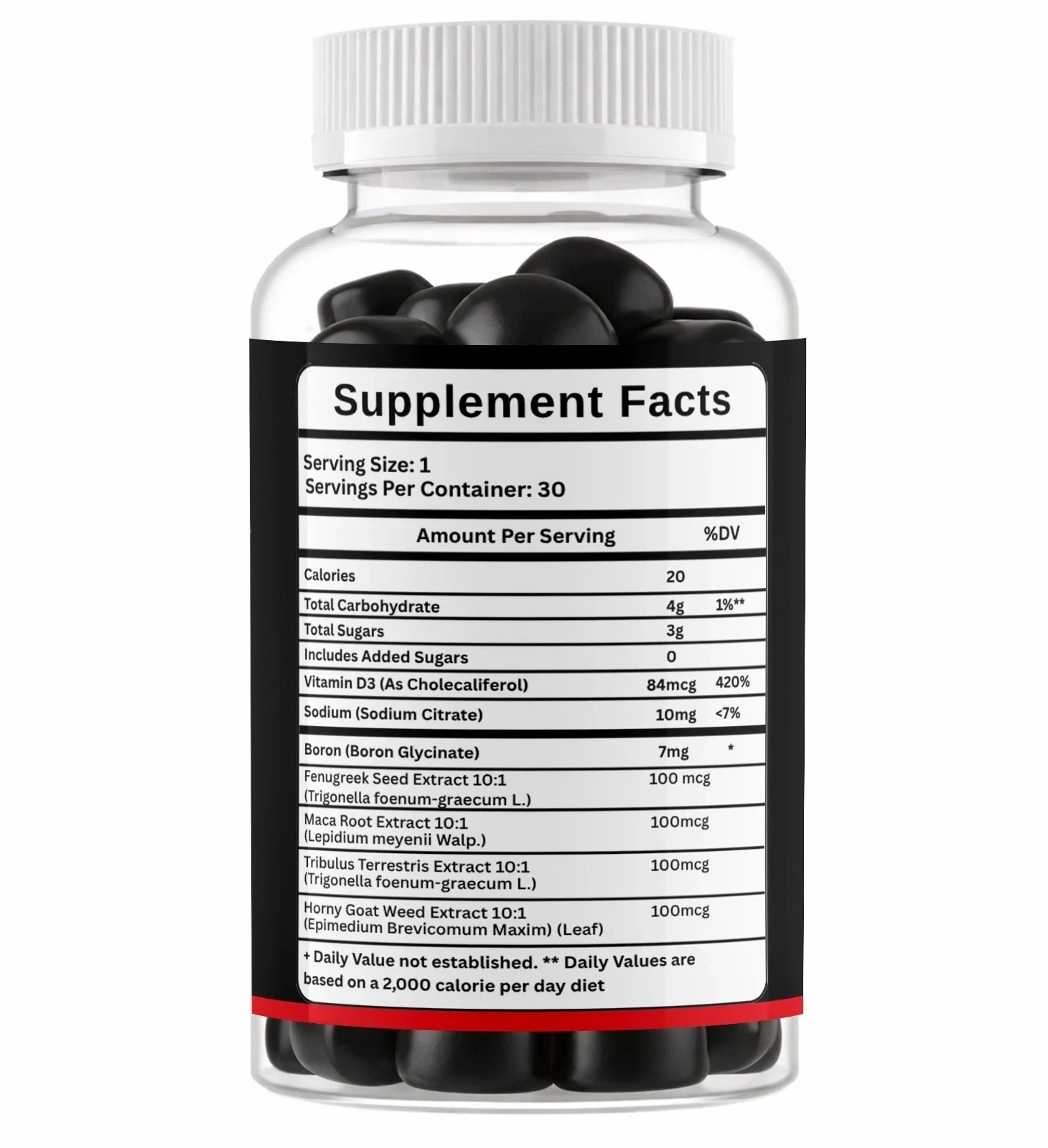
Horse Peak Gelatin ingredients are printed per gummy: 84 mcg of vitamin D3 (3,360 IU, 420% of the Daily Value), 7 mg of boron, 10 mg of sodium as sodium citrate, and four plant extracts at 100 mcg each: fenugreek, maca, tribulus and horny goat weed. No blend hides an amount. No other ingredients are listed, so the gelling agent is not published. Below, we read the panel line by line.
Quick answer: One gummy brings 84 mcg of vitamin D3, 7 mg of boron and four plant extracts of 100 mcg apiece, plus 10 mg of sodium as sodium citrate. No blend hides an amount. No other ingredients are listed, so the gelling agent is not published, and four printing slips were found.
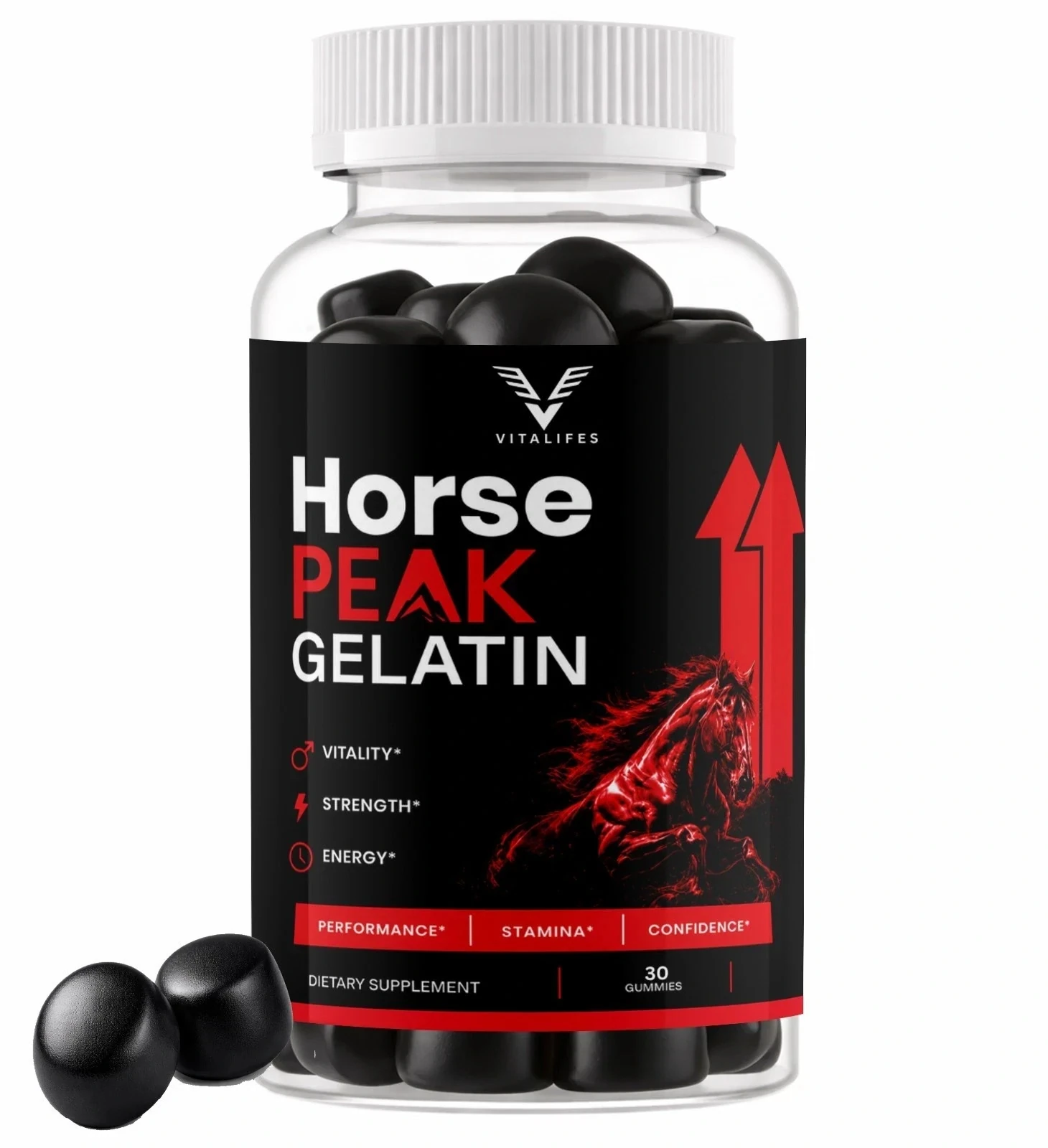
Want to look at the offer?
If the panel reads the way you want, the order page shows the packs, the postage and the 60-day terms in one view.
See today’s price and guaranteeDisclosure: this website is a retailer, not the maker, so an order made through this link is a sale for it. The checkout shows the current price.
- Serving size 1 gummy; 30 servings per bottle. Every amount is per gummy.
- Vitamin D3 84 mcg is 3,360 IU and 420% of the Daily Value.
- At 7 mg, boron covers 35% of the 20 mg adult ceiling. The other four rows (fenugreek, maca, tribulus, horny goat weed) hold 100 mcg apiece.
- 20 calories per gummy, with 3 g of sugar inside 4 g of carbohydrate. Added sugar is zero.
- Other ingredients: none listed, so the gelling agent stays unnamed.
- No independent lab test is published. Lot HOR-26/GO-6588 names a production run, not a result.
What is the full ingredient list on the label?
The Supplement Facts panel names six actives, plus sodium as sodium citrate and the usual nutrition lines. The serving is one gummy, and the bottle holds 30 servings, so every amount is already a per-gummy amount. Nothing needs dividing.
No proprietary blend is used. A blend would give one combined number for several ingredients and hide the split. Here each active has its own amount, and that is what makes the checking on this page possible.
- Vitamin D3 (as cholecalciferol), 84 mcg
- Boron (boron glycinate), 7 mg
- Fenugreek (Trigonella foenum-graecum L.) seed extract, ratio 10:1, 100 mcg
- Maca (Lepidium meyenii Walp.) root extract, ratio 10:1, 100 mcg
- Tribulus terrestris extract, ratio 10:1, 100 mcg
- Horny goat weed leaf (Epimedium) extract, ratio 10:1, 100 mcg
Sodium (as sodium citrate) adds 10 mg. Nothing else is listed, and the panel has no section for other ingredients.
Horse Peak Gelatin is a dietary supplement. It is not a drug and it is not FDA approved, and no supplement is. These statements have not been evaluated by the Food and Drug Administration. This product is not intended to diagnose, treat, cure or prevent any disease. Ask a doctor about your own health, your medicines and any change to your routine.
What does 84 mcg of vitamin D3 really mean?
It is the biggest row, and the easiest to check. Multiply 84 by 40 and you get 3,360 IU. Divide 84 by the 20 mcg Daily Value and you get 420%. The panel prints both figures, and both come out right.
Put against the adult upper limit of 4,000 IU, one gummy fills 84% of the ceiling. That is fine alone. It matters if another product in your cupboard also has vitamin D. As for the hormone link people hope for, the largest trial the seller cites gave 1,400 IU a day to 307 men and saw no overall shift in sex steroid levels.
So think of this row as a vitamin D supplement, nothing grander. If a blood test showed you were low, it is a decent way to take some. If you take capsules happily, a plain capsule costs far less.
What does 7 mg of boron bring?
Boron is a trace mineral, and the label uses boron glycinate. No Daily Value exists for it, so its row shows a footnote mark where a percentage would go.
The research behind the interest is small. The study people quote gave 10 mg a day for one week to eight men, and 7 mg is 70% of that. An older metabolic-unit study that started the interest used 3 mg a day. One gummy also fills 35% of the 20 mg adult upper limit, so check any joint or bone product you take for a second dose of boron.
Why are the four plant extracts only 100 mcg each?
That is a fair thing to ask, and the seller does not hide the answer. At 100 mcg these rows are tiny next to the amounts used in trials. Four of the six actives share this one small figure.
| Extract | Amount per gummy | Context from published trials |
|---|---|---|
| Fenugreek seed extract 10:1 | 100 mcg | Daily trial doses were measured in hundreds of milligrams |
| Maca root extract 10:1 | 100 mcg | Trials used from 1,500 mg to 3 g a day |
| Tribulus terrestris extract 10:1 | 100 mcg | A 1,500 mg standardised dose helped in one trial; 800 mg looked like placebo |
| Horny goat weed extract 10:1 | 100 mcg | No human oral dosing trial exists; the icariin work is in test tubes and rats |
Context only. An amount below a trial dose is not the same as nothing, but it cannot be expected to repeat that trial.
Over a whole 30-gummy bottle, each plant row adds up to just 3 mg in total. A single day of the smallest trial dose for fenugreek is 600 mg.
What does the 10:1 on four rows mean?
It describes how the extract was made, roughly the amount of raw plant used to produce one part of extract. It does not measure strength. A paper from the US Pharmacopeia group makes the point that plant-to-extract ratios only describe the process, and no analysis can confirm them.
So a bigger ratio on another label proves nothing, and the 10:1 here cannot be confirmed either. It is useful as a clue about the process, and not as a promise about the dose.
Which printing mistakes are on the panel?
Four slips were found on the artwork under magnification. None touches an amount, and the seller lists them openly.
| Where | What is printed | What is correct |
|---|---|---|
| Tribulus row | The Latin name of fenugreek | Tribulus terrestris L. |
| Sodium row | Under 7% of the Daily Value | 10 mg against 2,300 mg is 0.4% |
| Boron row | A mark that the footnote never explains | The footnote explains only a dagger |
| Spellings | Cholecaliferol and Brevicomum | Cholecalciferol and brevicornum |
The difference between a typesetting slip and a measuring slip matters. A wrong percentage beside a right milligram figure lowers our trust in the proofreading. It does not lower it in the formula.
What do the calorie and sugar lines add up to?
Each gummy carries 20 calories. Of its 4 g of carbohydrate, 3 g is sugar and none of it is added sugar. The sugar comes with another ingredient and still counts toward your day. Over a 30-gummy bottle the totals are 600 calories and 90 g of sugar.
The storage guidance on the label is to avoid heat, light and damp. The artwork shows an expiry of 07-2028.
What is not on the label?
- Other ingredients. The gelling agent, sweetener and colour are not named, even though the product has Gelatin in its name.
- An independent assay. Nobody has published a lab test of what is in a retail bottle.
- A full certificate of analysis. Lot HOR-26/GO-6588 and certificate reference HOR-6588-26-GO are filing references, not results.
- Any claim about a condition. The label sticks to six general words.
Where something is not published, we say so rather than guess. If the gelling agent matters to you, put that question to the order desk, +1 (877) 257-0710, before ordering.
Frequently asked questions
What are the ingredients in Horse Peak Gelatin?
Six actives: vitamin D3 (84 mcg), boron (7 mg), and extracts of fenugreek seed, maca root, tribulus terrestris and horny goat weed (100 mcg each), plus 10 mg of sodium as sodium citrate.
Is there a proprietary blend?
No. Every active has its own printed amount per gummy.
How much vitamin D3 is in one gummy?
84 mcg, which is 3,360 IU and 420% of the Daily Value. That is 84% of the 4,000 IU adult upper limit.
What does 10:1 mean on the extracts?
It describes how the extract was made. No lab method can verify the ratio, so it says nothing certain about strength.
Does the label list other ingredients?
No. The label has no section for other ingredients, so what sets the gummy and what sweetens it are not published.
Is there caffeine or any stimulant in it?
Nothing on the panel is a stimulant. The six actives are a vitamin, a mineral and four plant extracts.
Where do these facts come from?
Product facts come from the bottle label, the seller’s own pages and this website’s own records. Every outside source below is one this website already names. Each link opens the public record.
- the Institute of Medicine's upper intake level for vitamin D
- a trial in 307 infertile men
- the one human study to report a free-testosterone rise after boron
- the 1987 metabolic-unit study that started the boron interest
- the Institute of Medicine's upper intake level for boron
- the 600 mg Testofen trial in aging men
- the 1,500 and 3,000 mg maca trial
- the 1,500 mg Tribestan trial
- the 800 mg trial that found no effect
- a 2022 review of what icariin has and has not shown
- the United States Pharmacopeia group's paper on extract ratios
Our view
We like a panel that prints every amount, because it lets anyone do the sums. We also think the sums say something plain: two rows carry real amounts, and four carry tiny ones.
What would make this label better is an Other Ingredients line, an outside lab test and a clean proof of the printed percentages. Until then, read it as a decent vitamin D and boron gummy and do not credit the plant names with more.
Anyone on medication or living with a condition should hand their doctor a copy of the panel first.
Last updated . Medically reviewed by Dr. Aimee Duffy, MD, Physician.
More about Horse Peak Gelatin
Compare the panel with your own bottle
Once it arrives you can check every figure on this page against the label. The order page shows today’s terms.
See today’s price and guaranteeDisclosure: this website is a retailer, not the maker, so an order made through this link is a sale for it. The checkout shows the current price.